


Perfume Liquidation Pallet – Mixed Designer Fragrances
$800.00
One pallet of designer and department-store goods. $800 delivered. Sold as-is. Approximate count, condition varies.
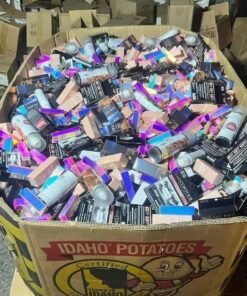
This assorted perfume liquidation pallet is one pallet of designer and department-store fragrance priced at $800.00. No piece count is published for this listing and none will be invented: loads of this class are published at roughly 80 to 250 pieces, which is the estimate to plan against. It is unmanifested and sold as-is — no itemised list, nothing opened, tested or graded before dispatch, and a photograph that shows the class of load rather than the exact pallet you receive. Part of any load is usually new or still tagged, with the rest returned stock whose condition varies.
What’s in this pallet
Fragrance loads carry eau de parfum, eau de toilette, gift sets and body sprays:
- Eau de parfum and eau de toilette
- Body sprays and mists
- Gift sets and miniatures
- Aftershave and cologne
Testers, unboxed bottles and partially used units appear in this class, and they must never be resold as new. Nothing about the brand mix, size run or category split is selected — a designer-class load is defined by its source channel, not by a named label list. The mix rotates with every intake, and nothing is selected, substituted or held back.
What this pallet costs per unit
The pallet is $800.00, and no per-piece figure is published, because the quantity is approximate and we will not state a number we cannot stand behind. No estimated retail value or expected resale figure is published for this lot. The price also leaves you to cover:
- The hours spent sorting, checking, cleaning and photographing
- The fees charged by whichever channel you sell through
- The share that never sells, plus the cost of disposing of it
- Storage until the load clears — once unwrapped and spread out for sorting, a standard pallet takes up roughly a car parking space, and more while the tiers are laid out
Where designer and department-store stock sells
- eBay, Poshmark and RealReal-style resale, for authenticated pieces
- Boutique racks
- Consignment
- Local luxury resale groups
Sell-through is rarely level. The strongest pieces move first, the middle sells for as long as you keep listing it, and the tail only shifts bundled or at a flat price.
Condition: as-is and uninspected
Department-store liquidation is mostly shelf pulls and end-of-season markdown stock, plus returns. Faults are usually cosmetic: missing tags, shop-floor handling and tired packaging. When you work this pallet:
- Authenticate independently before you make any claim about a piece
- Photograph labels and packaging in detail
- Grade cosmetically and price to the grade
- Never repeat a brand claim you have not verified yourself
Published industry guidance puts the unsellable share at roughly 1 to 5% on shelf pulls and overstock and 20 to 40% on customer returns, with 10 to 25% typical across a mixed load of this kind. Those figures describe the class, not a forecast for your pallet. Stock on this scale exists because, according to National Retail Federation returns research, US shoppers sent back an estimated $849.9 billion of merchandise in 2025, around 15.8% of everything bought, and returned stock has to go somewhere. The errors behind most disappointing outcomes on this class are repeating a brand claim you have not verified, pricing stock as authenticated when nothing has been authenticated, and photographing the piece but not its labels and packaging.
Who buys this pallet
Resellers with genuine authentication capability, and boutique and consignment operators. It is the wrong purchase for anyone who needs guaranteed authenticity, and for sellers who cannot authenticate independently.
Questions
Which brands are included?
Brand mix is never selected or listed. A brand named in the title describes the class of load.
Do you guarantee authenticity?
No. No authenticity claim is made on any individual piece in any load. Authenticate independently before you resell.
How many pieces will I get?
No piece count is stated for this load. Published guidance puts the class at roughly 80 to 250 pieces — an estimate to plan against rather than a promise.
Is there a manifest for this lot?
No. No itemised list of the contents exists at any stage. What is described above is the class of goods and the condition basis, which is everything that is known before it is opened.
Can I choose what is in it?
No. Nothing is selected, substituted or held back. A load is whatever the source channel cleared, which is the reason it is priced the way it is.
Be the first to review “Perfume Liquidation Pallet – Mixed Designer Fragrances”
Related products

Beauty & Personal Care
Beauty & Personal Care

Beauty & Personal Care

Beauty & Personal Care

Beauty & Personal Care

Beauty & Personal Care

Beauty & Personal Care

Beauty & Personal Care
Reviews
There are no reviews yet.