


Banana Box Food Liquidation Pallet
$400.00
One pallet of food and beverage. $400 delivered. Sold as-is. Nothing is tested or graded first.
One pallet of food and beverage at $400, with no piece count stated on the listing. Loads of this class are published at roughly 20 to 60 cases, which is the estimate to plan against.
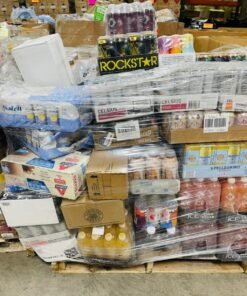
The pallet is sold unmanifested and as-is. Nothing is opened, tested or graded, no itemised list exists, and the image represents the class of goods. Expect a spread: some new or still tagged, the rest returned stock whose condition varies piece to piece.
What is in this pallet
- shelf-stable groceries
- snacks and confectionery
- beverages and drink mixes
- cooking oils, sauces and condiments
- cereals and breakfast items
- coffee and tea
- supplements and nutrition bars
- seasonal and gift food
Food ships by the case, so counts are usually expressed in cases rather than individual units. The mix rotates with each intake and nothing is selected, substituted or held back; no brand or category split is selected, and date ranges are never selected either.
What this pallet costs per unit
The price is $400, and no exact quantity is published for the lot. Counts in liquidation are approximations, so rather than print a figure that cannot be verified, this listing leaves the count open.
No retail value estimate and no resale projection is given. Before you commit, factor in the costs the purchase price leaves with you:
- Your time to sort, test where relevant, clean and photograph
- Selling fees on whatever channel you use
- The portion that will never sell, plus what it costs to dispose of it
- Floor space while it clears — once unwrapped and laid out for sorting, a pallet takes up about as much room as a parked car, and more besides
Where food and beverage stock sells
There are a few proven routes for this class, and deciding which one you are selling into before the load arrives is the difference between stock and dead stock:
- discount grocery and bin stores
- market stalls
- food-service and catering buyers
- community and surplus food outlets
Sell-through is rarely even: the strongest pieces clear first, the middle takes as long as you keep listing it, and the tail only moves bundled or flat-priced.
Condition: as-is and uninspected
Food and beverage reaches liquidation almost entirely because of dates, packaging changes and discontinued lines. Dates are the whole job on this class.
Working this pallet usually involves:
- Checking every date code before you do anything else
- Understanding the difference between best-before and use-by in your market
- Knowing your local food-resale rules before you buy
- Discarding anything damaged, swollen or breached
Published industry guidance puts the unsellable share at roughly 1 to 5% for shelf pulls and overstock and 20 to 40% for customer returns, with 10 to 25% typical across a mixed load of this type. Those are class figures, not a projection for your load.
Volumes like this exist because of returns. National Retail Federation research estimates that US shoppers returned around $849.9 billion of merchandise in 2025 — roughly 15.8% of everything bought — and that stock has to move somewhere.
Most of what goes wrong here is avoidable: buying before understanding local food-resale rules, treating best-before and use-by as the same thing, or buying more than you can rotate quickly.
Who buys this pallet
- discount grocery and bin store operators
- food-service buyers
- sellers who understand date rules
It is the wrong purchase for anyone without food-handling knowledge or licensing where required, and for sellers who cannot move stock quickly.
Questions
Is packaging intact?
Not always. Discard anything damaged, swollen or breached.
Are dates checked before shipping?
No. Nothing is date-checked, inspected or graded before it ships.
How many cases will I get?
This listing states no count. Published guidance for the class suggests roughly 20 to 60, but treat that as a planning estimate, never a commitment.
Is there a manifest for this lot?
No itemised contents list exists at any point. Everything knowable before the pallet is opened is the class of goods and the condition basis set out above.
Can I choose what is in it?
No. Nothing is picked out, swapped or withheld; a load is simply whatever the originating channel cleared, which is exactly why it is priced as it is.
Be the first to review “Banana Box Food Liquidation Pallet”
Related products

Health, Grocery & Household

Health, Grocery & Household

Health, Grocery & Household

Health, Grocery & Household
Health, Grocery & Household

Health, Grocery & Household
Health, Grocery & Household

Health, Grocery & Household
Reviews
There are no reviews yet.