


General Merchandise Liquidation Pallet – Reseller Returns Lot
$849.00
One pallet of general merchandise. $849 delivered. Sold as-is. Condition varies and nothing is graded first.
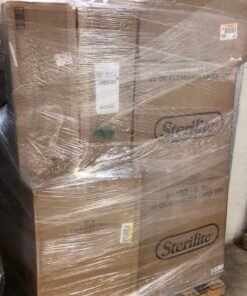
A reseller pallet of general merchandise at $849.00, made up of mixed retail returns. The listing states no piece count, and none will be invented: loads of this class are published at roughly 150 to 600 pieces, which is the estimate to plan against. The load is unmanifested and sold as-is. No itemised list exists at any stage, nothing is inspected or graded first, and the photograph represents the class rather than your pallet. Some of the contents are typically new or still tagged; the remainder is returned stock in varying condition.
What is in this pallet
Typical contents of a reseller pallet of this class:
- Household and kitchen goods
- Apparel and accessories
- Toys and games
- Personal care and beauty
- Small electronics and accessories
- Stationery, gift and seasonal items
- Pet and garden sundries
- Hardware and DIY sundries
General merchandise is the broadest class shipped. Loads mix cartons, bagged goods and loose items, and piece counts run high. No category weighting is selected or promised — the mix is whatever the retailer cleared, which is exactly why it is sold by the load rather than by the line — and the final mix rotates with each intake.
What this pallet costs per unit
The price is $849.00, and no piece count is published for it, because the quantity is approximate and we will not state a number we cannot stand behind. No estimated retail value and no expected resale figure is published for this lot. What the price does not cover is yours to estimate:
- The hours spent sorting, testing where testing applies, cleaning and photographing
- The fees charged by whichever channel you sell through
- The share that will not sell at all, and the cost of disposing of it
- Storage until it clears — a standard pallet takes up roughly the footprint of a car parking space once unwrapped, and more while the tiers are laid out for sorting
Condition: as-is and uninspected
General merchandise is the retail floor’s whole clearance in one load: shelf pulls, seasonal resets, discontinued lines, overstock and returns, mixed together without sorting. When you work this pallet:
- Triage into resale, bundle and discard tiers on the first pass
- Price by tier rather than by unit — unit-level pricing does not pay on this class
- Bundle the low tier aggressively
- Expect a genuine discard share and plan for disposal
Published industry guidance puts the unsellable share at roughly 1 to 5% on shelf pulls and overstock and 20 to 40% on customer returns, with 10 to 25% typical across a mixed load of this type. Those are figures for the class, not a projection for your load. Stock like this exists at scale for one reason: National Retail Federation returns research estimates that US shoppers sent back $849.9 billion of merchandise in 2025, about 15.8% of everything they bought, and returned stock has to go somewhere. Buyers who end up disappointed have usually priced unit by unit when the class only pays by tier, had no disposal route for the discard share, or underestimated the floor space a load needs.
Where general merchandise stock sells
- Bin stores — general merchandise is the model this class was made for
- Market stalls and flea markets
- Facebook Marketplace and live selling
- eBay for whatever individually merits a listing
Sell-through is rarely even. The strongest pieces clear first, the middle moves for as long as you keep listing it, and the tail only shifts bundled or flat-priced.
Who buys this pallet
Bin store and discount-rack operators, flea-market and market-stall sellers, live sellers moving mixed goods, and resellers who work on volume rather than margin per unit. It is the wrong purchase for buyers who need a predictable category mix, sellers who cannot absorb a discard tier, and anyone with no space to sort several hundred pieces.
Questions
What categories will be in it?
Never selected or promised. General merchandise means the mix is whatever the source retailer cleared.
Will there be unsellable items?
Expect a discard tier. Plan for disposal as part of your processing.
How many pieces will I get?
No piece count is stated for this load. Published guidance puts the class at roughly 150 to 600 pieces, which is an estimate to plan against rather than a promise.
Is there a manifest for this lot?
No. No itemised list of its contents exists at any stage. What is described above is the class of goods and the condition basis, which is everything that is known before it is opened.
Can I choose what is in it?
No. Nothing is selected, substituted or held back. A load is whatever the source channel cleared, which is the reason it is priced the way it is.
Be the first to review “General Merchandise Liquidation Pallet – Reseller Returns Lot”
Related products
General Merchandise & Mystery Boxes

General Merchandise & Mystery Boxes

Amazon Liquidation

General Merchandise & Mystery Boxes

General Merchandise & Mystery Boxes

General Merchandise & Mystery Boxes

General Merchandise & Mystery Boxes

Amazon Liquidation
Reviews
There are no reviews yet.