

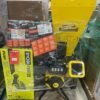

Home Depot Power Tool Pallet – Roughly 35 Tools · Lot HDT-3329
$1,049.00
One pallet of power tools. Home Depot stock. Roughly 35 tools at $1,049. Sold as-is. Condition varies and nothing is graded first.
A single pallet of power tools from the Home Depot clearance channel, priced at $1,049. The listing states roughly 35 tools, putting the cost at about $29.97 per tool. The pallet is unmanifested and sold as-is: no itemised list exists at any stage, nothing has been inspected or graded, and the photograph represents the class rather than your pallet. Some stock is typically new or still tagged, with the remainder returned in varying condition.
What is in this pallet
A load of this type typically holds:
- drills and impact drivers
- circular, reciprocating and mitre saws
- grinders and sanders
- batteries and chargers
- rotary and oscillating tools
- nailers and air tools
- work lights
- tool bags and cases
Units arrive as boxed kits, bare tools and loose pieces mixed together, and kits frequently lack their batteries or chargers. The mix rotates with each intake; contents and brands differ from one order to the next, and nothing is selected, substituted or held back. No brand, voltage platform or kit configuration is picked out: the source channel defines the load.
What this pallet costs per unit
At $1,049 for roughly 35 tools, the cost works out at about $29.97 per tool. Base your numbers on the higher per-unit figure, since the count is approximate and there is no itemised list to count against.
No estimated retail value and no expected resale figure is published for this lot. What the price does not cover is yours to estimate:
- the hours to sort, test where testing applies, clean and photograph
- the fees on whichever channel you sell through
- the share that will not sell at all, and the cost of disposing of it
- storage until it clears — a standard pallet needs roughly the footprint of a car parking space once you have unwrapped it and started sorting, and more while the tiers are laid out
Condition: as-is and uninspected
Power tool returns combine some of the strongest demand in liquidation with some of its hardest processing. Nothing has been powered on. Expect missing batteries, missing chargers and missing bits alongside tools that came back faulty.
Working this pallet usually means:
- testing every tool under load, not merely for power-on
- checking for batteries and chargers, whose absence is the main value gap
- keeping platform batteries together, as they sell separately and well
- parting out faulty bodies for motors, chucks and housings
Published industry guidance puts the unsellable share at roughly 1 to 5% on shelf pulls and overstock and 20 to 40% on customer returns, with 10 to 25% typical across a mixed load of this type. Those are figures for the class, not a projection for your load. Stock like this exists at scale for one reason: according to National Retail Federation returns research, US shoppers sent back an estimated $849.9 billion of merchandise in 2025, about 15.8% of everything they bought, and returned stock has to go somewhere.
Buyers who end up disappointed have usually done one of these:
- tested for power-on instead of under load
- split platform batteries from their tools
- assumed kits include their batteries and chargers
Where power tool stock sells
This class has a handful of dependable outlets, and choosing between them before you order is what decides whether the load pays:
- eBay — power tools have one of the most brand-loyal secondary markets
- Facebook Marketplace and OfferUp in trade-heavy markets
- jobsite and trade sales
- repair shops and parts-out
Sell-through is rarely even: the strongest pieces clear first, the middle takes as long as you keep listing it, and the tail only moves bundled or flat-priced.
Who buys this pallet
- tool resellers working brand-loyal demand
- repair and refurbishment trades
- jobsite and trade sellers
- flea-market and swap-meet operators
It is the wrong purchase for anyone who cannot test tools properly and for sellers who need complete boxed kits. We would rather say so here than have a load arrive and disappoint.
Questions
Will batteries be included?
Often not. Missing batteries and chargers are the commonest gap in tool loads.
Are tools tested?
No. Nothing is powered on or run under load before shipping.
Is the stated count guaranteed?
No. It approximates what a load of this class usually holds. With no itemised list, a shortage claim cannot be honoured against it.
Is there a manifest for this lot?
No. No itemised list of its contents exists at any stage. What is described above is the class of goods and the condition basis, which is everything that is known before it is opened.
Can I choose what is in it?
No. Nothing is selected, substituted or held back. A load is whatever the source channel cleared, which is the reason it is priced the way it is.
Be the first to review “Home Depot Power Tool Pallet – Roughly 35 Tools · Lot HDT-3329”
Related products

Home Depot Liquidation

Tools & Hardware

Home Depot Liquidation
Tools & Hardware
Tools & Hardware

Tools & Hardware

Tools & Hardware

Tools & Hardware
Reviews
There are no reviews yet.