



Men’s & Women’s Clothing Liquidation Pallet – 250 Pieces
$1,200.00
One pallet of apparel. Roughly 250 pcs at $1,200. Sold as-is. Nothing is tested or graded first.
One pallet of men’s and women’s apparel priced at $1,200. The listing states roughly 250 pieces, which works out at about $4.80 per piece.
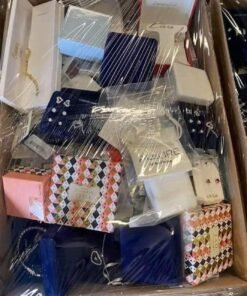
The pallet is unmanifested and sold as-is. No itemised list exists, nothing is opened, tested or graded before dispatch, and the photograph illustrates the class of load rather than the exact pallet you will receive. Part of a load is usually new or still tagged; the remainder is returned stock in varying condition.
What is in this pallet
A typical load of this class contains:
- tops, tees and blouses
- jeans, trousers and shorts
- dresses and skirts
- hoodies, sweaters and fleece
- jackets and outerwear
- loungewear and basics
- accessories that ship with apparel
Apparel usually travels poly-bagged or loose in gaylords and cartons rather than individually boxed, which is why piece counts run high. Size and season mix vary from load to load: retailers clear the ends of a size curve first, so plus and petite sizes can be over-represented with no pattern to it. The contents change with every intake, and nothing is picked, swapped or held back.
What this pallet costs per unit
At $1,200 for roughly 250 pieces, the cost works out at about $4.80 per piece. Run your numbers from the higher per-unit figure: the count is approximate, and there is no itemised list to count against. No estimated retail value or expected resale figure is published for this lot. What the price leaves for you to budget:
- the hours spent sorting, laundering, steaming and photographing
- the fees of whichever channel you sell through
- the share that will never sell, plus the cost of disposing of it
- storage until it clears — once unwrapped and laid out for sorting, a standard pallet takes up roughly a car parking space, and more while the tiers are spread out
Where apparel stock sells
- eBay and Poshmark for branded pieces
- Whatnot and live selling for volume by bundle
- bin stores and $5 racks
- market stalls, church halls and pop-ups
Sell-through is rarely even: the strongest pieces move first, the middle sells for as long as you keep listing it, and the tail only shifts bundled or at a flat price. Deciding your route before the load arrives is the difference between stock and dead stock.
Condition: as-is and uninspected
Apparel is the highest-piece-count class shipped here. Much of it is unsold seasonal stock still carrying tags; the rest is returns, where the usual faults are missing tags, laundry wear, marks and broken zips.
Working this pallet well means:
- triage into resale, bundle and rag on the first pass
- launder and steam the resale tier before photographing
- bundle by size rather than by style — it sells faster
- expect a tail that only works as bulk or rag grade
Published industry guidance puts the unsellable share at roughly 1 to 5% on shelf pulls and overstock and 20 to 40% on customer returns, with 10 to 25% typical across a mixed load of this type. Those are class figures, not a forecast for your pallet. Stock of this kind exists at scale for one reason: National Retail Federation returns research estimates that US shoppers sent back $849.9 billion of merchandise in 2025, about 15.8% of everything bought, and returned stock has to go somewhere.
Buyers who end up disappointed have usually listed piece by piece when the load only pays as bundles, underestimated laundry and steaming time on the resale tier, or had no plan for the rag-grade tail before it arrived.
Who buys this pallet
- clothing resellers who can process volume
- bin store and rack operators
- live sellers who move goods by the bundle
It is the wrong purchase for buyers who need a size run or a colourway, and for sellers with no space to sort several hundred pieces.
Questions
Is it all new?
No. Part of a load is usually new or still tagged; the rest is returned stock in varying condition.
Will there be a rag tier?
Most apparel loads carry a tail that only works as bulk or rag grade. Budget processing time for it.
Is the stated count guaranteed?
No. It approximates what a load of this class usually holds. With no itemised list behind it, a shortage claim cannot be honoured against it.
Is there a manifest for this lot?
No. No itemised list of the contents exists at any stage. What is described here is the class of goods and the condition basis, which is everything known before the pallet is opened.
Can I choose what is in it?
No. Nothing is selected, substituted or held back. A load is whatever the source channel cleared, which is why it is priced the way it is.
Be the first to review “Men’s & Women’s Clothing Liquidation Pallet – 250 Pieces”
Related products

Apparel & Clothing
Apparel & Clothing
Apparel & Clothing
Apparel & Clothing

Apparel & Clothing
Training Shoes Liquidation Pallet – 100 Pairs · Mixed Brands
Apparel & Clothing

Apparel & Clothing
Apparel & Clothing
Reviews
There are no reviews yet.