
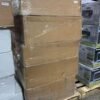


Microwave Appliances Liquidation Pallet
$2,000.00
One pallet of small appliances. $2,000 delivered. Sold as-is. Approximate count, condition varies.
One pallet of small appliances at $2,000. No piece count is stated on this listing; published figures for this class run at roughly 15 to 50 units, which is the estimate to plan against.
It is unmanifested and sold as-is. There is no itemised list, nothing is opened, tested or graded before dispatch, and the photograph shows the class of load rather than the exact pallet you receive. Part of any load is usually new or still tagged; the rest is returned stock whose condition varies.
What is in this pallet
Small-appliance loads carrying air fryers, blenders, coffee makers, microwaves, mixers and kettles. Typical contents:
- Air fryers and multi-cookers
- Blenders and food processors
- Coffee makers and kettles
- Toasters and microwaves
- Mixers and kitchen tools
Small kitchen appliances have one of the highest return rates in retail, so this class is returns-heavy by nature, and missing attachments are the main write-off. The mix rotates with each intake; contents, brands and sizes differ from one order to the next, and nothing is selected, substituted or held back. No model or brand split is selected — a load is defined by its source channel.
What this pallet costs per unit
The pallet price is $2,000. No exact count is published for this lot, and that is deliberate: without a manifest there is no figure that could be checked, so none is promised. No estimated retail value or expected resale return is published either.
Before you commit, allow for costs the pallet price does not include:
- Your time to sort, check, clean and photograph the stock
- Selling fees on whichever channel you use
- The portion that will never sell, plus disposing of it
- Storage space while the load clears — once unwrapped and laid out for sorting, a pallet takes up roughly a car parking space, and more at peak
Where this stock sells
Proven routes for this class include:
- Facebook Marketplace and OfferUp for local volume
- Bin stores and discount racks
- eBay for tested branded units
- Parts-out for attachments and spares
Deciding your route before the load arrives is the difference between stock and dead stock. Sell-through is rarely even: the strongest pieces clear first, the middle takes as long as you keep listing it, and the tail moves only bundled or flat-priced.
Condition: as-is and uninspected
Small appliances are one of the most-returned categories in retail. Expect missing parts and attachments, used and unwashed units, and appliances that came back because they failed.
Working a pallet like this usually means:
- Power-testing every unit
- Checking attachments and accessories against the retail spec — missing parts are the main write-off
- Cleaning thoroughly, as many returns come back used and unwashed
- Photographing honestly, including box damage
Industry guidance for loads of this kind puts the unsellable share at about 1 to 5% for shelf pulls and overstock, and 20 to 40% for customer returns, with 10 to 25% typical across a mixed load. Treat those as class figures, not a forecast for your pallet.
Volumes like this exist because of returns. National Retail Federation research estimates US shoppers returned $849.9 billion of merchandise in 2025, around 15.8% of everything bought, and that stock has to be cleared somewhere.
Buyers who end up disappointed have usually listed without power-testing, missed attachments against the retail spec, or sold a returned unit without cleaning it.
Who buys this pallet
- Local resellers who can move bulky goods
- Bin store operators
- Resellers who can test and clean
It is the wrong purchase for sellers who need complete boxed units, and for anyone shipping small parcels only.
Questions
Are units clean?
No. Returned appliances frequently arrive used and unwashed. Clean before resale.
Will attachments be complete?
Often not. Missing attachments are the commonest fault in this class.
How many units will I get?
No count is stated for this load. Published guidance for the class is roughly 15 to 50 units — an estimate to plan against rather than a promise.
Is there a manifest for this lot?
No. No itemised list exists at any point. What is known before opening is the class of goods and the condition basis described above, and that is all.
Can I choose what is in it?
No. Nothing is picked out, swapped or held back. A load is whatever the source channel cleared, which is why it is priced by the pallet.
Be the first to review “Microwave Appliances Liquidation Pallet”
Related products

Home, Kitchen & Appliances
Small Kitchen Appliances Liquidation Pallet – Coffee Makers & Mixers

Home, Kitchen & Appliances

Home, Kitchen & Appliances

Home, Kitchen & Appliances

Home, Kitchen & Appliances

Home, Kitchen & Appliances

Home, Kitchen & Appliances

Home, Kitchen & Appliances
Reviews
There are no reviews yet.