

Activewear Liquidation Pallet – 115 Pieces
$1,299.00
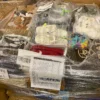
One pallet of activewear. Roughly 115 pieces at $1,299. Sold as-is. Nothing is tested or graded first.
One pallet of activewear at $1,299. The listing states roughly 115 pieces, putting the cost at about $11.30 per piece. The pallet is sold unmanifested and as-is — nothing opened, tested or graded, no itemised list, and the image represents the class of goods. Expect a spread: some pieces new or still tagged, the rest returned stock whose condition varies piece to piece.
What is in this pallet
Activewear is normally poly-bagged, and branded activewear is the class most likely to arrive with tags still attached.
- Leggings and tights
- Sports bras and tops
- Shorts and joggers
- Technical tees and tanks
- Zip-ups, hoodies and outer layers
- Yoga and studio accessories
Colourway and size leftovers are the usual reason activewear reaches liquidation at all. Colour and size mix are never selected — seasonal colour drops are a common reason the stock ends up here — and the mix rotates with each intake.
What this pallet costs per unit
At $1,299, the pallet works out at about $11.30 per piece. Run your numbers from the higher per-unit figure: the count is approximate, and there is no itemised list to count against.
No estimated retail value or resale figure is published for this lot. The price also leaves several costs with you:
- Your time sorting, testing where testing applies, cleaning and photographing
- The selling fees on whatever channel you use
- The share that never sells, and what it costs to dispose of it
- Storage while it clears — an opened pallet, tiers laid out for sorting, takes up about the footprint of a car parking space, and more at peak
Where activewear stock like this sells
- eBay, Poshmark and Mercari — activewear has among the strongest resale demand in apparel
- Whatnot and live selling
- Boutique racks and studio pop-ups
- Facebook groups organised by brand
Pick the channel before the pallet lands. Sell-through is rarely even: the strongest pieces clear first, the middle takes as long as you keep listing it, and the tail moves only bundled or flat-priced.
Condition: as-is and uninspected
Activewear clears through liquidation mainly as colourway and size leftovers plus try-on returns. Faults are usually cosmetic: pulled threads, missing hang tags, and pilling on worn pieces.
Working a load of this kind usually means:
- Checking seams, waistbands and pilling before listing
- Photographing the actual garment rather than a stock image
- Letting brand and size drive price more than style
- Keeping unbranded technical pieces as bundle stock
Published industry guidance puts the unsellable share at about 1 to 5% for shelf pulls and overstock and 20 to 40% for customer returns, with 10 to 25% typical across a mixed load of this kind. Those are class figures, not a forecast for your pallet.
Returns on this scale are why stock like this exists at all: National Retail Federation research estimates US shoppers returned $849.9 billion of merchandise in 2025, roughly 15.8% of everything bought, and that returned stock has to go somewhere.
Disappointed buyers on this class have usually priced on brand alone while ignoring pilling and pulls, used stock images instead of photographing the garment, or assumed tags were attached across the whole load.
Who this suits
- Resellers already working the activewear category
- Boutique and studio sellers
- Live sellers
It is the wrong purchase if you are expecting a specific brand ratio, or need a guaranteed size run.
Questions
Are tags attached?
Often, but not on everything — returned pieces frequently come back without tags.
Can I request colours?
No. The colour mix is whatever the load holds.
Is the stated count guaranteed?
No. The figure approximates what a load of this class usually holds, and with no itemised list behind it, a shortage claim cannot be honoured against it.
Is there a manifest for this lot?
No itemised list of the contents exists at any point. What is set out above — the class of goods and the condition basis — is everything known about the load before it is opened.
Can I choose what is in it?
No. Nothing is picked out, swapped or held back. A load is whatever the source channel cleared, which is why it is priced the way it is.
Be the first to review “Activewear Liquidation Pallet – 115 Pieces”
Related products

Apparel & Clothing

Apparel & Clothing
Apparel & Clothing

Apparel & Clothing
Apparel & Clothing


Apparel & Clothing
Apparel & Clothing
Apparel & Clothing
Reviews
There are no reviews yet.