
Buying Guides
Liquidation Truckloads vs Pallets: Which Should You Buy?
Nov
If you are scaling a resale business, you will eventually compare single pallets with liquidation truckloads. Both can work, but they suit very different budgets, storage setups, and sales volumes. Buying the wrong format ties up cash and fills space you do not have. Buying the right format keeps your cost per unit low and your workflow manageable.
This guide breaks down the differences — upfront cost, cost per unit, storage, labour, and risk — so you can decide whether to start with pallets, step up to a full trailer, or take the middle path with a multi-pallet order.
What Is a Pallet, and What Is a Truckload?
A liquidation pallet is a single pallet of assorted merchandise from retailer returns, overstock, shelf pulls, and seasonal clearance. The contents are grouped broadly by category — apparel, general merchandise, electronics, home goods, tools, toys, and similar lines. Many loads are unmanifested, which means there is no item-by-item list before you buy. Exact brands, quantities, and condition vary by load, and stock is sold as-is. That variety is normal in liquidation, and it is why experienced buyers inspect, sort, and price each piece themselves.
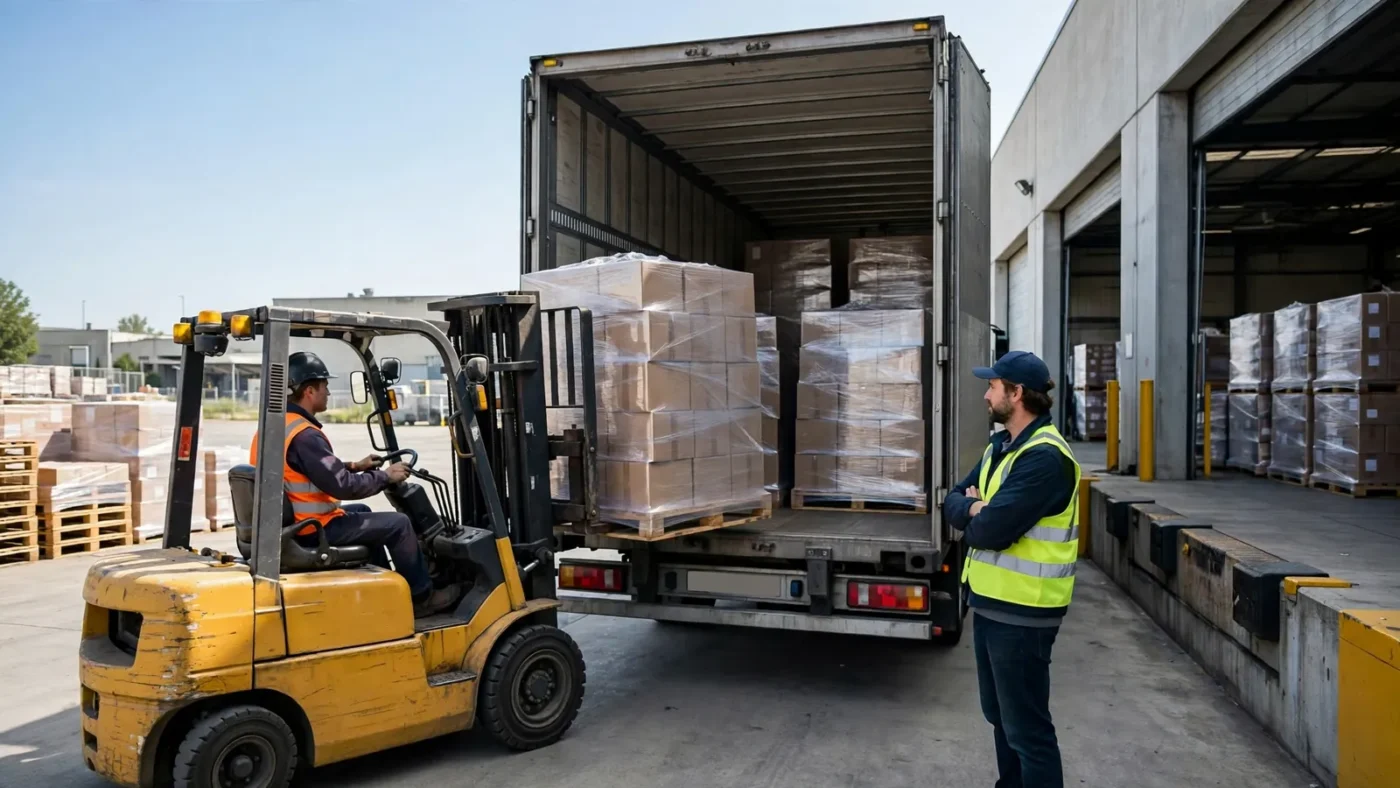
Liquidation truckloads are the same idea at trailer scale. A truckload is a full trailer of pallets, typically 24 to 26 pallets depending on pallet height and how the trailer is loaded. Instead of choosing one or two pallets, you are buying the whole trailer as a single order. The merchandise mix is usually broader, the volume is far higher, and the buying decision is closer to stocking a small warehouse than topping up a garage or a single shop.
At Overstock Liquidation Pallets, you can browse both formats. Our truckloads category sits alongside single pallets across 20 categories, with 900+ pallets and loads in stock. Single pallets start from $200 for apparel and from $300 for general merchandise, which makes it practical to test a category before committing to a full trailer.
Side-by-Side: Single Pallets vs a Full Truckload
The table below compares liquidation truckloads with single pallets on the factors that matter most to resellers. Use it as a quick filter before you look at individual listings.
| Factor | Single pallets | Full truckload |
|---|---|---|
| Upfront cost | Low — pallets from $200 to a few hundred dollars or more depending on category | High — you are paying for 24 to 26 pallets at once, even at a lower per-pallet rate |
| Cost per unit | Higher per piece, because you are buying in smaller volume | Lower per piece, because the whole trailer is priced as bulk volume |
| Storage needed | One pallet footprint — a garage corner, storage unit, or shop back room can work | Warehouse or large storage space with room to unload, stage, and sort a full trailer |
| Sorting labour | Manageable for one person or a small team over a few days | A real operation — plan for multiple people and a sorting system by category and condition |
| Risk spread | Concentrated — if one pallet is weak, it is a large share of your buy | Spread across the whole trailer — strong pallets can offset weaker ones |
| Best for | New sellers, online resellers testing a category, flea market vendors, and small shops | Bin stores, discount stores, and high-volume sellers who turn stock quickly |
Two points deserve emphasis. First, cost per unit only helps if you can sell the volume — a cheaper per-piece price is not a saving if stock sits for months eating storage costs. Second, risk differs by scale: with one pallet your result depends heavily on that load, while a trailer evens out the mix but exposes far more cash if your sales channel is slow.
For a deeper look at what individual loads cost and why prices vary, read our guide on how much liquidation pallets cost.
Who Should Start With Pallets
Most resellers should start with pallets. A single pallet lets you learn how liquidation stock behaves: how long sorting takes, what sells on your channel, what pricing buyers accept, and which categories fit your business — for a few hundred dollars instead of a trailer.
Start with pallets if:
- You are new to liquidation and have not sold returns or overstock before.
- You sell mainly online — marketplaces, live selling, or your own store — and list items one by one.
- Your storage is a garage, a small unit, or the back of a retail shop.
- You want to test a new category, such as tools or beauty, before buying deeper.
- Your cash flow depends on turning one buy before funding the next.
There is also a learning curve you cannot skip. Unmanifested loads require judgement: grading condition, pricing mixed brands, and moving slower pieces in bundles or lots. One or two pallets teach you that process at a survivable scale.
When a Full Truckload Makes Sense
A truckload makes sense when your sales volume already outruns pallet-by-pallet buying. The clearest cases are:
Bin stores
Bin stores burn through volume by design. Shoppers expect fresh bins on a regular cycle, and a slow week with thin stock hurts foot traffic. A trailer gives a bin store a deep bench of merchandise to refill bins for weeks without reordering every few days.
Discount and surplus stores
If you have retail floor space and customers who buy on price, a truckload lets you stock wide — a little of everything — at a per-unit cost that supports discount pricing and still leaves margin. The broad mix that is a challenge for a solo online seller is an advantage on a shop floor.
High-volume online sellers
Sellers with an established listing team, warehouse space, and steady daily orders can absorb a trailer and keep it moving. If you already sell through several pallets a week, buying liquidation truckloads as a single order usually beats repeated small orders on price.
The common thread is throughput. If you can sell a pallet every few days, a truckload is a supply decision. If one pallet lasts you a month, it is a storage problem.
The Middle Path: Multi-Pallet Orders
Between one pallet and a full trailer sits the option many growing sellers actually use: ordering several pallets at once. A multi-pallet order lets you mix categories — for example, apparel, general merchandise, and home goods in one buy — spread your risk across different types of stock, and keep the total spend and storage within reach.
This is also a sensible way to prepare for truckload buying. Order three to five pallets and measure how long they take to sort and sell. If they clear in two weeks, you have real evidence a trailer could work. If they take two months, you have saved yourself from a trailer sitting in storage.
You can build a multi-pallet order directly from the shop, mixing categories to suit your channel. If you are unsure which categories pair well for your type of store, call us on (937) 794-3674 and talk through what you sell and how fast you turn it.
How Ordering and Delivery Work for Both
The process is the same whether you buy one pallet or a full trailer from Overstock Liquidation Pallets:
- Place your order online first. Choose your pallets or truckload and check out through the website.
- We send you the payment details. You then pay by Zelle, Cash App, Apple Pay / Apple Cash, Chime, or bank wire.
- Your order is dispatched within 1 business day after payment clears.
- Delivery typically takes 1 to 5 business days after dispatch, depending on distance from our warehouse in Middletown, Ohio. Closer states — the Ohio, Indiana, and Kentucky area — are usually at the faster end, often 1 to 2 days.
Delivery is a flat $180 per order anywhere in the USA — and a truckload counts as one order, so the same flat rate applies. That matters in the truckload maths: instead of paying freight on dozens of separate pallet shipments, the whole trailer moves under a single order with a single delivery charge from our one warehouse at 2628 Tytus Ave, Middletown, OH 45042.
New to the format entirely? Our liquidation pallets buyer’s guide walks through grades, manifests, and what to check before your first order.
Frequently Asked Questions
How many pallets are in a full truckload?
A full truckload is a full trailer of pallets, typically 24 to 26 pallets depending on pallet height and how the trailer is loaded. The exact count and mix vary by load, so check the listing details or ask us before you order if you need a specific configuration.
Is a truckload always cheaper than buying pallets?
Per unit, usually yes — bulk volume brings the cost per piece down. But total cost is what matters: a truckload ties up far more cash and needs warehouse space and sorting labour. If the stock sells slowly, storage and tied-up capital can erase the per-unit saving. Pallets are the cheaper way to learn and to test categories.
Can I mix categories in one order?
Yes. With single and multi-pallet orders you choose each pallet yourself, so you can mix apparel, general merchandise, electronics, home goods, and other categories in one order. A truckload, by contrast, comes as a set trailer load with a broader pre-set mix. Either way, delivery is a flat $180 per order anywhere in the USA.
Do truckloads come with a manifest?
Many liquidation loads are unmanifested, and truckloads are no exception — there may be no item-by-item list before you buy. Exact brands, quantities, and condition vary by load, and stock is sold as-is. Buyers should plan to inspect and sort the full trailer on arrival and price items based on what is actually there.
Ready to Compare Pallets and Truckloads?
Whether you are testing your first pallet or stocking a store with a full trailer, Overstock Liquidation Pallets has 900+ pallets and loads across 20 categories, with pallets from $200 and flat $180 delivery per order anywhere in the USA. Browse the full shop, compare the truckloads against single pallets, or call us on (937) 794-3674 to pick the format that fits your space, budget, and sales speed.
