


Mixed Bags & Accessories Liquidation Pallet
$1,250.00
One pallet of bags and accessories. $1,250 delivered. Sold as-is and untested. Condition varies.
One pallet of bags and accessories at $1,250, with no piece count stated on the listing. Loads of this class are published at roughly 100 to 400 pieces, which is the estimate to plan against.
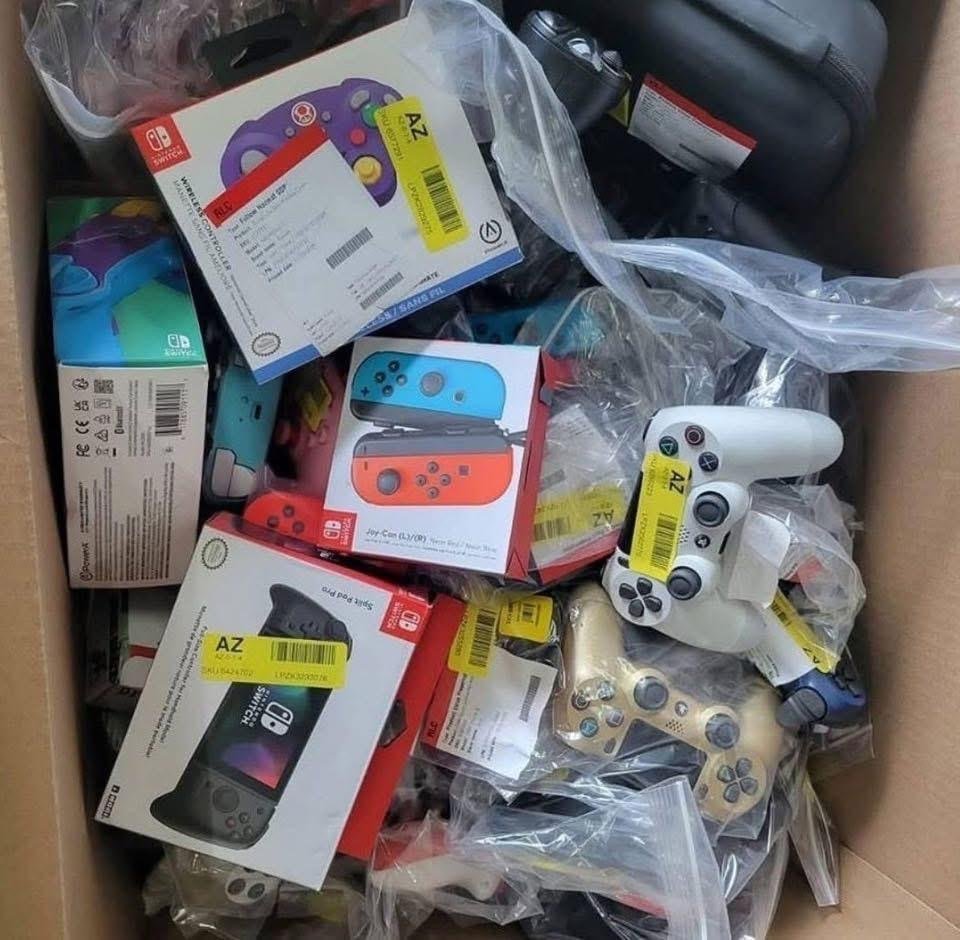
The pallet is sold unmanifested and as-is. Nothing is opened, tested or graded, no itemised list exists, and the image represents the class of goods. Expect a spread: some new or still tagged, the rest returned stock whose condition varies piece to piece.
What is in this pallet
- handbags, totes and crossbodies
- backpacks and travel bags
- wallets and small leather goods
- sunglasses and eyewear
- watches
- costume jewellery
- belts, hats, caps and scarves
- gloves and umbrellas
Accessories are light and small, so piece counts run high and a pallet holds a lot of individual units. The mix rotates with each intake and nothing is selected, substituted or held back. There is no size curve here, which makes accessories among the easier classes to process, though colour and style mix are still never selected.
What this pallet costs per unit
The price is $1,250, and no exact quantity is published for the lot. Counts in liquidation are approximations, so rather than print a figure that cannot be verified, this listing leaves the count open.
No retail value estimate and no resale projection is given. Before you commit, factor in the costs the purchase price leaves with you:
- Your time to sort, test where relevant, clean and photograph
- Selling fees on whatever channel you use
- The portion that will never sell, plus what it costs to dispose of it
- Floor space while it clears — once unwrapped and laid out for sorting, a pallet takes up about as much room as a parked car, and more besides
Where bags and accessories stock sells
Stock of this kind moves through a few reliable channels, and picking the right one before the pallet lands matters more than the buying price:
- eBay and Poshmark
- Facebook Marketplace and local groups
- market stalls and kiosks
- bin stores for the lower tier
Sell-through is rarely even: the strongest pieces clear first, the middle takes as long as you keep listing it, and the tail only moves bundled or flat-priced.
Condition: as-is and uninspected
Accessories clear as season and colour leftovers plus returns. The usual faults are scratched hardware, missing dust bags, scuffed corners and broken clasps on the returned share.
Working this pallet usually involves:
- Checking zips, clasps and hardware first — that is where the write-offs are
- Cleaning leather and polishing hardware before photographing
- Counting and sorting small items early, because they go missing
- Never claiming authenticity on a branded bag you have not verified
Published industry guidance puts the unsellable share at roughly 1 to 5% for shelf pulls and overstock and 20 to 40% for customer returns, with 10 to 25% typical across a mixed load of this type. Those are class figures, not a projection for your load.
Volumes like this exist because of returns. National Retail Federation research estimates that US shoppers returned around $849.9 billion of merchandise in 2025 — roughly 15.8% of everything bought — and that stock has to move somewhere.
Buyers who end up disappointed have usually priced before checking zips, clasps and hardware, let small items go missing during sorting, or claimed designer authenticity on an unverified bag.
Who buys this pallet
- resellers who want high unit counts in a small footprint
- market-stall and kiosk operators
It is the wrong purchase for buyers who need matched styles or colours, and for anyone expecting verified designer goods.
Questions
Are bags boxed?
Rarely. Most arrive bagged or loose, often without dust bags.
Is designer hardware authenticated?
No. No authenticity claim is made on any piece.
How many pieces will I get?
This listing states no count. Published guidance for the class suggests roughly 100 to 400, but treat that as a planning estimate, never a commitment.
Is there a manifest for this lot?
No itemised contents list exists at any point. Everything knowable before the pallet is opened is the class of goods and the condition basis set out above.
Can I choose what is in it?
No. Nothing is picked out, swapped or withheld; a load is simply whatever the originating channel cleared, which is exactly why it is priced as it is.
Be the first to review “Mixed Bags & Accessories Liquidation Pallet”
Related products

Electronics

Electronics

Electronics


Electronics

Electronics

Reviews
There are no reviews yet.